
Dental prosthetics
At Dental Centar Repić we pay special attention to preserving the function of the teeth and the whole chewing system.
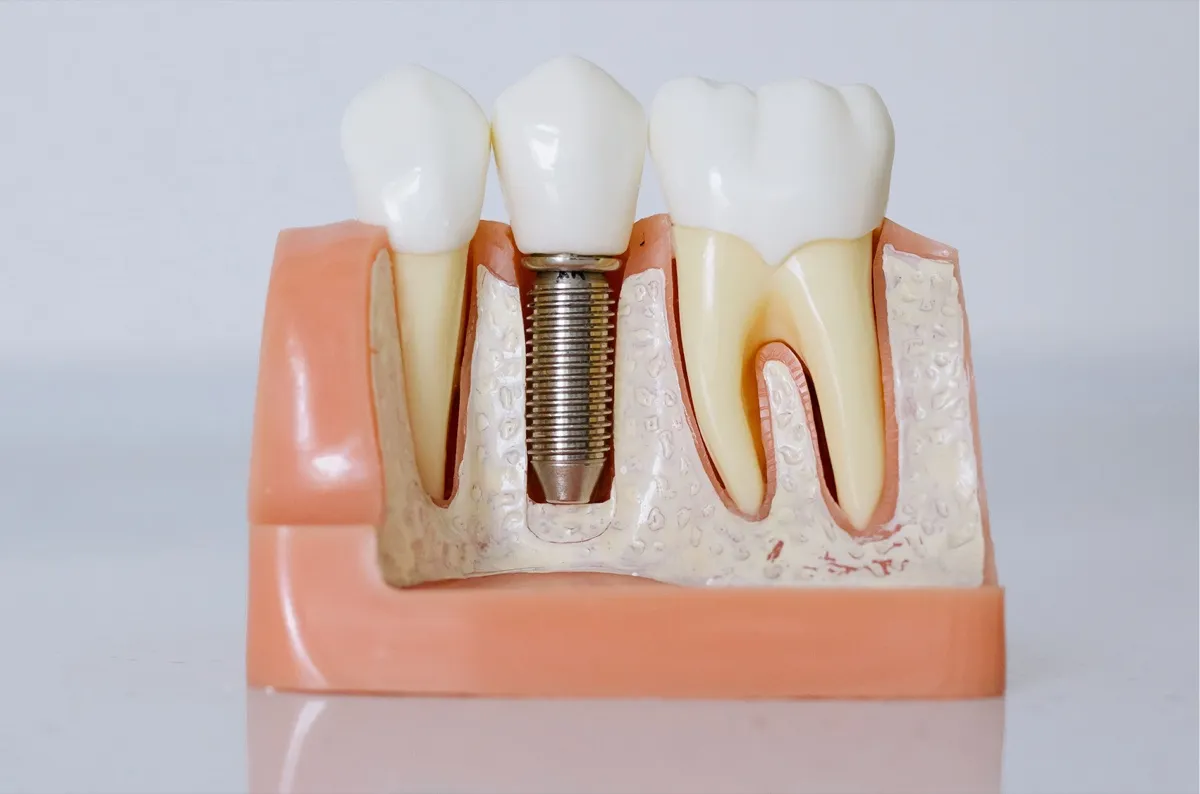
After a thorough clinical examination and analysis of X-rays of the teeth and jaws, we propose an individual prosthetic treatment plan to each patient to replace one or more lost teeth. Depending on the clinical findings and the patient's budget, lost teeth can be replaced with removable or fixed prosthetics.
Removable prosthetics (dentures) are indicated for patients who have lost all or some of their teeth. There are several ways to stabilise a denture in the mouth, such as combined removable and fixed work, telescopic crowns or implant-retained dentures.
Fixed prosthetics include veneers, dental crowns, dental bridges and bridges on implants. We use modern restorative materials that meet patients' high aesthetic and functional demands.
Metal-ceramic crowns and bridges
Metal-ceramic crowns and bridges have long been used in dental prosthetics and are regarded as something of a standard in fixed prosthetic treatment. They are still patients' most common choice today, thanks to their affordable price and durable materials. The metal framework of the crown or bridge protects the supporting teeth, while the ceramic imitates the lost teeth. The metal base is most often an alloy of cobalt, chrome and nickel, dental gold or titanium. Ceramic is fired onto the metal base in layers and bonds chemically to the metal.
Once crowns or a bridge have been agreed with the patient, the dentist first grinds down the supporting teeth to make enough room for the prosthetic. The next step is taking an impression, from which the laboratory makes the prosthetic work. At this stage the ceramic shade that will best imitate the natural teeth is also chosen. After it is made in the laboratory and tried in at the clinic, the crown or bridge is first cemented temporarily and then permanently.
Metal-ceramic prosthetics are suitable for replacing one or more lost teeth in the front or back of the jaw. When correctly indicated, they have the right mechanical and aesthetic properties.
The main advantages of metal-ceramic crowns and bridges are their price, mechanical strength and durability. According to the literature, as many as 90-95% of metal-ceramic replacements last ten years in the mouth. They cost somewhat less than all-ceramic (metal-free) replacements.
Their drawback is more limited aesthetics compared with all-ceramic (metal-free) systems. This is due to the dark grey metal base: because the metal under the ceramic blocks light, the tooth colour can look less natural. Patients sometimes also complain of a dark edge of gum (gingiva) along the margin of the crown, as over time metal ions are released from the base of the crown into the gum. Careful preparation (grinding) of the supporting tooth can make this side effect less frequent.
All-ceramic crowns and bridges (metal-free ceramic)
Crowns and bridges made entirely of ceramic are the alternative to metal-ceramic replacements, and are also known as "porcelain" teeth. Patients' aesthetic demands keep rising today and are often decisive when choosing how to restore and replace lost teeth. All-ceramic crowns and bridges imitate natural teeth perfectly, and in this they are superior to metal-ceramic. Unlike metal-ceramic replacements, where the metal base blocks the passage and scattering of light and so affects the tooth colour, metal-free crowns and bridges have outstanding aesthetics that imitate natural teeth. For the patient, getting an all-ceramic crown is similar to getting a metal-ceramic one: the tooth is ground down (to make room for the replacement) and an impression is taken and sent to the laboratory. At the same time the shade that best matches the patient's wishes and their existing teeth is chosen. Once made, the finished work is cemented ("glued") onto the prepared teeth. Less grinding is needed for these replacements, so more healthy tooth tissue can be preserved. Because they are made by computer, these crowns and bridges fit the prepared margin of the tooth precisely, which makes cleaning easier and reduces food trapping and gum inflammation.
New materials have given metal-free (all-ceramic) restorations excellent mechanical properties without sacrificing aesthetics. In strength and durability, all-ceramic crowns and bridges are comparable to metal-ceramic systems. According to the literature, 91-97% of metal-free ceramic replacements last five years or longer in the mouth.
Metal-free ceramic work can replace one or more lost teeth. Newer materials for all-ceramic fixed prosthetics include leucite-reinforced lithium disilicate ceramic, leucite- or lithium-disilicate-reinforced glass-ceramic, and oxide ceramics such as alumina and zirconia. Metal-free crowns and bridges cost somewhat more than metal-ceramic ones, because making them at the clinic and in the laboratory is more complex.
Zirconia crowns and bridges
Zirconia (zirconium oxide) ceramic is a type of metal-free ceramic that is used more and more in dental prosthetics thanks to its outstanding aesthetic and functional properties, for fixed prosthetics (crowns and bridges) in the front or back of the jaw. It belongs to the oxide ceramics, which are very tough, resistant to wear and high temperatures, and do not corrode. Zirconia has been used in medicine and dentistry for more than 50 years. In orthopaedics it is used for the heads of hip joint replacements, while in dentistry, besides prosthetics, it is used for prefabricated posts, orthodontic brackets and implant abutments.
The base of the crown or bridge is zirconium dioxide, onto which ceramic is fired. It is white and does not show through at the margin of the replacement. Zirconium dioxide is biocompatible and does not cause allergic reactions. It conducts electricity and heat poorly, which helps reduce tooth sensitivity. Zirconia has many qualities: top aesthetics; exceptional strength; biocompatibility; and less grinding of the natural tooth thanks to the strength of the material (a thickness of just 0.4 mm is strong enough). Because it is so strong and hard, zirconia can be machined from factory-made blocks. Thanks to computer-aided manufacture, a zirconia crown or bridge sits precisely on the prepared margin of the tooth, which makes oral hygiene easier and reduces the chance of gum (gingiva) inflammation.
Aesthetically this material is an excellent choice, as it imitates the natural translucency and colour of teeth very well, while its high strength rivals that of the strongest metals. Its mechanical properties are comparable to metal-ceramic replacements, while it imitates natural teeth better. The final colour of the work depends on the thickness of the ceramic, the thickness and colour of the cement and the colour of the tooth stump. Because it is so strong, very thin replacements can be made from it (with a framework of just 0.3 mm in the front of the jaw and 0.6 mm at the side) that keep the translucency and aesthetics of the material. It is suitable for both the front and the back of the jaw, and can also be used for large restorations replacing many lost teeth.
Zirconia crowns and bridges cost somewhat more than metal-ceramic ones, because making them at the clinic and in the laboratory is more complex: the grinding, the impression and the cementing of the finished work must be very precise so that the replacement (crown or bridge) fits the prepared tooth exactly.
Glass-ceramic: E.max and Empress
Glass-ceramic is made by the controlled crystallisation of glass. There are several types with different properties: IPS Empress ceramic (leucite-reinforced glass-ceramic), IPS Empress 2 ceramic (with a lithium disilicate core, stronger and tougher than the first) and IPS E.max ceramic, which is similar in make-up to IPS Empress 2 (a lithium disilicate core) but much stronger than the other two.
E.max Press or Empress crowns and bridges are all-ceramic crowns and bridges made of lithium disilicate ceramic. Its high translucency gives outstanding aesthetics, so it is especially indicated for restorations in the aesthetic zone of the jaw (the area visible in a full smile). It is stronger than other glass-ceramics and is indicated for restorations in the front of the jaw: single crowns or three-unit bridges up to and including the second premolar, single crowns in the front or back of the dental arch, veneers and indirect fillings (inlays, onlays). E.max ceramic comes in a wide range of shades, so it can imitate natural teeth very well.
Three factors affect the colour of the final work: the colour of the prepared tooth stump, the colour of the cement and the colour of the crown. In some cases lithium disilicate ceramic is not simple to use, because differently coloured prepared stumps could show through the crown, but with knowledge of the material and the preparation technique such problems can be solved to the satisfaction of both patient and dentist.
By combining cements of different colours and translucency, an even crown colour can be achieved even when the prepared teeth are not evenly coloured. After the crowns are finally cemented onto the prepared teeth, the joins between crown and tooth are polished to make hygiene easier.
For a result that works well and looks good, it is important to choose these restorations for the right cases. E.max crowns are mechanically somewhat weaker than zirconia, so they are not recommended for large restorations at the back of the mouth, but for single crowns or three-unit bridges in the front of the dental arch up to and including the second premolar, single crowns in the front or back of the arch, veneers and indirect fillings (inlays, onlays).
Frequently asked questions
How long will crowns last in the mouth?
That is hard to say. Over a 10-year period, 85-95% of crowns of all materials last, worldwide and here, which is considered successful prosthetic treatment. Even so, many factors affect how long prosthetic work lasts, such as regular check-ups and oral hygiene, the condition of the supporting teeth and gums, choosing the right work for the case, and making it properly. Because of all these factors, the life of the work can vary from patient to patient.
How do I keep crowns and bridges clean?
- Patients sometimes wrongly assume that their teeth are protected by "caps", that is, crowns or bridges, and that oral hygiene need not be thorough. This is a big misconception. Through the effort they put into oral hygiene and regular check-ups with the dentist, patients can do a great deal to make their prosthetic work last longer and keep the rest of their teeth healthy.
- Crowns and bridges should be brushed the same way as natural teeth: from the upper right quadrant to the upper left, then the lower left and the lower right. All surfaces of the teeth and replacements should be brushed, for three minutes in total. Circular movements are recommended, and the final strokes should go "from red to white", from gum to tooth, to slow the gum (gingiva) from receding after fixed prosthetic treatment. Many aids make cleaning prosthetic work easier, such as floss with threaders, electric toothbrushes, water flossers and interdental brushes. Plaque-disclosing tablets, available over the counter, show patients how well they are brushing. We will gladly show you how to keep your teeth clean properly, so that together we make your replacement last longer, to your satisfaction and ours.
Contact us
Book your appointment.
The first examination is free.
Fill in the form or give us a call — we will get back to you within our working hours.