
Oral surgery
Oral surgery at Dental Centar Repić is performed by award-winning doctors with many years of practice.
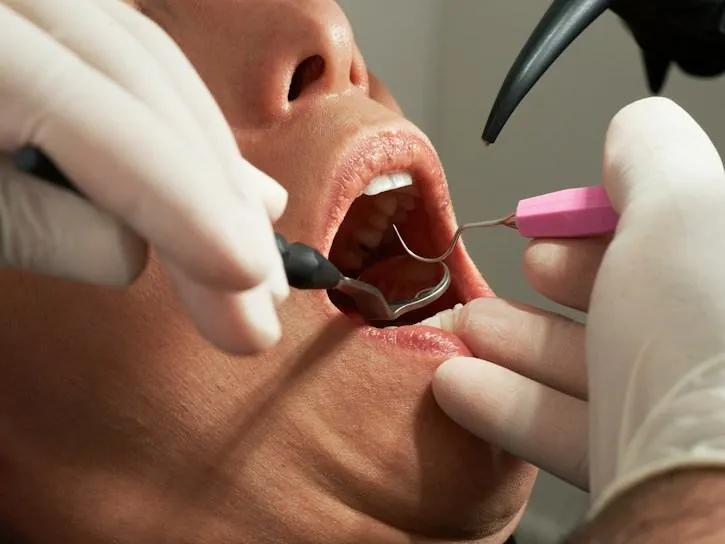
First-class oral surgery
Oral surgery is the surgical branch of dentistry. An oral surgeon's work includes extracting teeth, extracting impacted or retained teeth by alveotomy, removing cysts in the bones of the upper and lower jaw, apicoectomy, frenectomy, placing dental implants and raising the floor of the upper jaw's sinus (sinus lift). The most common procedure is extraction. Although dentists and patients work hard to keep teeth in the mouth for as long as possible, there are cases where deep decay, a broken tooth or periodontal disease means a tooth has to come out.
Extractions are routine surgical procedures done under local anaesthesia. Before any surgery in the mouth, the oral surgeon takes a detailed medical history. It is important to list all the medicines the patient takes, so that they do not affect bleeding during and after the procedure or the healing of the wound. After the procedure, the wound is closed with stitches or left to heal on its own. The patient receives advice on easing swelling and pain, and a check-up with the dentist is recommended a week after the extraction to see how the wound is healing and remove any stitches.
What is alveotomy?
Besides simple extractions, we also extract impacted or retained teeth by alveotomy (alveolotomy). Any tooth in the jaw can be impacted or retained. Impacted teeth cannot erupt into place because of a mechanical obstacle, while retained teeth fail to erupt for reasons that are not mechanical. The teeth most often impacted are the wisdom teeth, the third molars. If the bone over the crown of an impacted tooth connects with the mouth, the area is hard to clean properly and the surrounding soft tissue becomes inflamed, a condition called pericoronitis. If an impacted or retained tooth causes problems, we recommend removing it by alveotomy.
Alveotomy is an oral surgery procedure done under local anaesthesia, so it is completely painless for the patient. The patient is conscious the whole time and can communicate with the oral surgeon. Before the alveotomy, the oral surgeon takes a detailed medical history. It is important to list all the medicines the patient takes, so that they do not affect bleeding during and after the procedure or the healing of the wound. The alveotomy starts with local anaesthesia, followed by an incision in the gum with a scalpel. The jaw bone is opened with a drill to give the surgeon access, and the tooth left in the jaw is removed from the bone with special surgical instruments (chisels, elevators) with minimal trauma to the surrounding tissue. Afterwards the wound is stitched to help it heal, and the patient receives post-operative instructions. Seven days later there is a check-up at the clinic and the stitches are removed.
What is apicoectomy?
Apicoectomy is an oral surgery procedure that removes the tip of the root of a tooth that has had root canal treatment. It is done by an oral surgery specialist. An apicoectomy is needed when root canal treatment has not ended the pain and inflammation, or when even repeated root canal treatment has not made a granuloma at the root tip shrink, as seen on a control X-ray. Surgical removal of the root tip (apicoectomy) is then recommended, so that the tooth can stay in the jaw.
Apicoectomy is done under local anaesthesia, so the procedure is completely painless. Before it, the oral surgeon takes a detailed medical history. It is important to list all the medicines the patient takes, so that they do not affect bleeding during and after the procedure or the healing of the wound. The procedure in detail: it starts with a local anaesthetic, and the patient is conscious throughout and can communicate with the oral surgeon. Once the area is numb, the oral surgeon makes a horizontal incision at the level of the affected tooth's root tip and opens the bone with a drill to reach the area. The root tip is cut off and the inflamed tissue in the bone is scraped away. If needed, a retrograde root filling can then be placed to seal the canals, after which the wound is closed with stitches. The procedure takes about half an hour to an hour, depending on how thick the bone is in that part of the mouth. Afterwards only a barely visible scar remains on the gum, and the bone defect fills in over a few months.
Apicoectomy is done when root canal treatment is not enough to heal inflammation that has developed in the bone because infection spread from the root canals, or when there are oral cysts attached to the root. After an apicoectomy the root is slightly shorter, but the tooth stays in the jaw and keeps its function and appearance.
Frequently asked questions
When should impacted or retained teeth be extracted?
- with repeated pericoronitis
- with an abscess
- with disease of the pulp or periodontium
- with extensive destruction of the tooth by decay
- when the root of the neighbouring tooth is being resorbed
What are the symptoms of pericoronitis?
- pain spreading to the ear and jaw joint
- difficulty opening the mouth (trismus)
- difficulty swallowing
- swollen lymph nodes under the jaw and on the neck
- pus draining when the swollen soft tissue over the tooth is pressed
What are the contraindications for alveotomy (when is it not recommended)?
- a tooth that causes no local or general problems
- older age of the patient (the bone has a poorer blood supply)
- a compromised medical history
What can I do to ease pain and swelling after an extraction?
Cool the area of the extraction from the outside, eat lukewarm, soft food, and avoid anything hot or fizzy for the next few days. Smokers should avoid smoking so that the wound heals more easily and quickly. If needed, you can take a painkiller, but avoid products containing acetylsalicylic acid (Andol, Aspirin), which can make the wound bleed for longer.
Contact us
Book your appointment.
The first examination is free.
Fill in the form or give us a call — we will get back to you within our working hours.