
Endodontics
Endodontics is a specialist field of dental medicine closely linked with restorative dentistry and cariology.
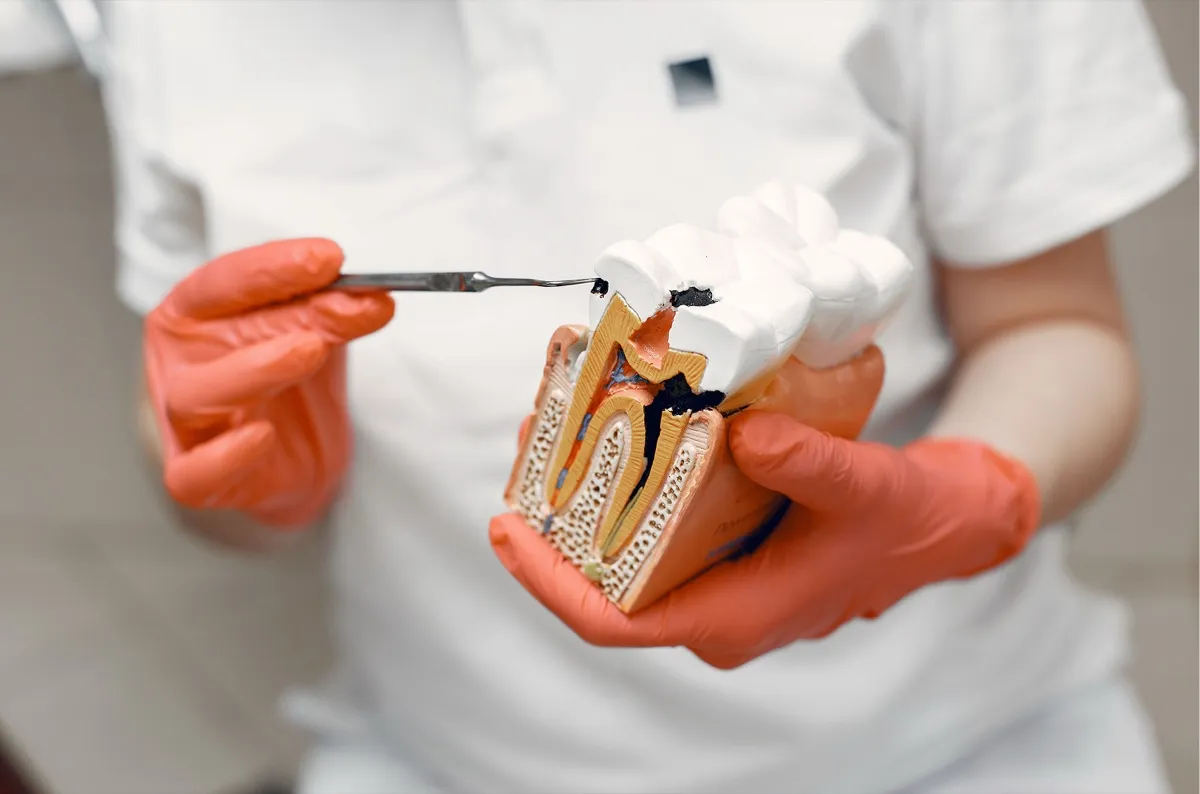
Root canal treatment
Restorative dentistry and cariology treat disease of the hard tooth tissue, the dentin. When irreversible inflammation develops in the pulp, the soft tissue inside the tooth has to be treated, which means treating the root canals. This is done with endodontic treatment, often simply called endodontics.
Why does a tooth hurt?
Toothache is an unpleasant symptom that most people experience at least once in their life. A tooth can hurt for different reasons: sometimes the cause is exposed dentin; inflammation in the periodontal tissue or around the root tip; inflammation in nearby tissues such as the sinuses, when the pain is felt in the teeth; or inflammation of the tooth itself, that is, of the dental pulp. In some cases the cause is not easy to find, and the dentist will do a thorough examination, certain clinical tests and an X-ray. Once the cause is identified, the treatment is decided.
How does tooth inflammation develop?
Inflammation of the dental pulp (pulpitis, "tooth inflammation") can have various causes, such as deep decay, grinding the teeth or an incorrect bite that overloads the tooth. When a tooth is inflamed, the blood vessels inside the pulp widen, the capillaries become more permeable and fluid escapes into the surrounding area, which raises the pressure. The pulp is also called the "tooth nerve", but it actually contains blood and lymph vessels as well as nerve fibres, and sits in the pulp chamber. Because the pulp chamber is a rigid structure that cannot expand, the rising pressure inside it presses on the nerves in the pulp and causes pain. Pain from an inflamed tooth can vary in character and spread or radiate to nearby structures: pain from lower teeth often spreads towards the ear, while pain from upper teeth usually spreads towards the eye.
In reversible inflammation of the tooth (the dental pulp), the pain comes and goes, is triggered by stimuli (warm, cold, biting) and stops when the cause is removed; in irreversible inflammation, the pain is spontaneous and almost constant. Other symptoms can include swollen lymph nodes near the affected tooth, pus draining from a fistula on the gum, a loose tooth, swelling around the tooth, fever and feeling generally unwell. If the inflammation is not treated, the infection spreads through the root canal into the surrounding bone and a granuloma forms. The granuloma destroys the surrounding bone, and the infection can spread through the blood to the rest of the body.
How is tooth inflammation treated?
Tooth inflammation is treated according to its cause. In reversible inflammation of the pulp, it is enough to remove the cause (decay, premature contact, exposed tooth necks) and give the tooth a filling, after which the symptoms settle. In irreversible inflammation of the pulp, a filling is not enough, and endodontic treatment is needed.
What is endodontic treatment?
An endodontic procedure ("endodontics") is treatment of the tooth's root canals to keep the tooth in the mouth. It involves removing the dental pulp (so-called nerve removal), then cleaning and rinsing the root canals with special hand or machine files and a rinsing solution that removes remaining bacteria and inflammatory products and disinfects the canals. The canals are then filled with purpose-made filling materials. Root canal treatment needs a dry, sterile working field to stop bacteria from the mouth getting into the bone. Every further treatment depends on well-treated root canals. A tooth that has had endodontic treatment can carry prosthetic work and put off the need for a denture or implants for a long time. It is always best to try to save your own tooth, as it is the best replacement there is.
It is our duty to make endodontic treatment painless, which we achieve with local anaesthesia. Depending on how complex the case is, you may need several visits for us to treat the tooth properly. Only when every step is done correctly is endodontic treatment successful. After the treatment is finished, the tooth may be sensitive to pressure for a while, which is a common side effect, but it is important that the pain and sensitivity ease gradually. If needed, you can take a painkiller. The symptoms should go within a few days.
We are equipped with modern devices for measuring the canal length precisely and for machine preparation of the root canals. We check the final root canal filling with an X-ray. This lets us treat your tooth in the shortest possible time and spare you unnecessary visits.
Contact us
Book your appointment.
The first examination is free.
Fill in the form or give us a call — we will get back to you within our working hours.